The Trump administration’s newly announced U.S. dietary guidelines are sending ripples through the global food industry — and K-Food exports to America may be entering a turning point.
The new guidelines strongly emphasize reducing ultra-processed foods (UPFs) while encouraging diets rich in protein, fruits, vegetables, and minimally processed ingredients. As a result, Korean food exports dominated by instant noodles and frozen dumplings could face headwinds, while fermented foods like kimchi may emerge as unexpected winners.
“Cut Ultra-Processed Foods” — A Challenge for Processed K-Food
According to industry sources, the guidelines released on January 8 call for limiting ultra-processed foods, added sugars, and refined carbohydrates due to their links to obesity, diabetes, and cardiovascular disease.
Foods high in refined grains and added sugars were specifically flagged for contributing to blood sugar spikes and overconsumption. Instead, Americans are encouraged to consume whole grains, fiber-rich produce, and minimally processed foods to improve satiety and nutritional density.
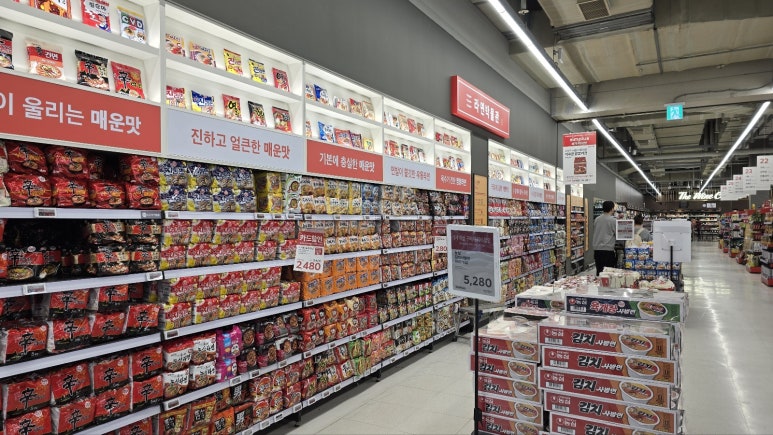
This shift raises concerns for K-Food brands heavily reliant on ramyeon, frozen dumplings, snacks, and other convenience foods, which have driven much of Korea’s recent export growth in the U.S.
“Most Korean foods that perform well in the U.S. are processed products like instant noodles and frozen mandu,” one industry insider noted. “While these guidelines aren’t regulations yet, they could influence future product development and packaging strategies.”
The U.S. Is Korea’s Largest Growth Market
The stakes are high. According to Korea Customs Service data, K-Food exports reached a record USD 8.48 billion from January to September 2025, up 8.9% year-on-year. Processed foods accounted for 61.3% of total exports, totaling USD 5.19 billion.
The United States remains the largest and fastest-growing market, with exports hitting USD 1.6 billion (+13.1%), representing nearly 19% of total K-Food exports.
With American consumer awareness and retailer nutrition standards potentially shifting, Korean food companies are watching closely.
Kimchi Named in U.S. Guidelines — A Major Opportunity
Despite concerns, industry observers see a silver lining.
The new U.S. dietary guidelines explicitly mention fermented foods for gut health, citing kimchi as an example — a rare and symbolic acknowledgment in an official government document.
This recognition could significantly boost demand for kimchi and other Korean fermented foods as American consumers increasingly associate them with digestive health and clean eating.
“Health awareness in the U.S. has already driven growth in kimchi and seaweed snacks,” another industry source said. “Now that kimchi is officially mentioned in government guidelines, demand could accelerate.”
Market Reaction: Kimchi-Related Stocks Rise
Following the announcement, kimchi-related stocks surged in Korea’s stock market. Companies such as Daesang (Jongga brand), Pulmuone, and CJ CheilJedang, which operates U.S. production facilities, saw increased investor interest.
While the guidelines are not legally binding, experts note they often influence public school meals, federal nutrition programs, health campaigns, and retailer standards, making their long-term impact difficult to ignore.
KOREA FBI Editor’s Comment
The U.S. shift away from ultra-processed foods could mark a defining moment for K-Food. While instant products may face scrutiny, kimchi’s elevation from “ethnic side dish” to “government-endorsed health food” signals a powerful narrative change. The future of K-Food in America may depend less on speed and convenience — and more on fermentation, function, and food philosophy.
작성자 소개