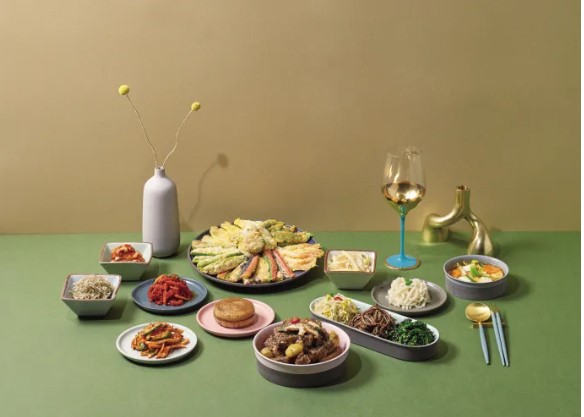
Korea’s Lunar New Year (Seollal) is changing.
In 2026, the biggest trend isn’t traditional ritual tables — it’s Home Meal Replacements (HMR).
As more Korean households skip ancestral rites and inflation continues to pressure grocery prices, retailers and food giants are aggressively pivoting toward convenience foods. And this shift isn’t temporary — it’s redefining Korean holiday culture itself.
63.9% of Households Skip Ancestral Rites
According to a survey by the Rural Development Administration,
63.9% of consumers in the Seoul metropolitan area said they will not hold ancestral rites this Lunar New Year — a 12.4% increase from last year.
Even families that still perform rituals are simplifying them:
- Fewer dishes
- Smaller portions
- Semi-prepared foods instead of scratch cooking
The Lunar New Year is no longer a massive bulk-buying event. It’s becoming an extension of everyday consumption.
Inflation Makes Traditional Ritual Tables Expensive
According to the Seoul Agro-Fisheries & Food Corporation,
the cost of key ritual table ingredients rose more than 4% year-over-year across traditional markets and major retailers.
Preparing a full ancestral rite table can cost hundreds of dollars.
For many families — especially single-person households — convenience is now more practical than tradition.
Convenience Stores Dominate the Holiday Market
Korea’s top convenience store brands are leading the transformation.
GS25
Operated by GS Retail, GS25 launched:
- 9-side-dish Lunar lunchbox
- King Dumpling Tteokguk
- Assorted Jeon & Japchae
- Holiday Tteokgalbi Kimchi Fried Rice
CU
Run by BGF Retail, CU released:
- 8-side-dish holiday lunchbox
- 7-jeon assortment sets
- Discount promotions for solo holiday shoppers
E-MART & Lotte Mart
E-MART and Lotte Mart are offering 10–30% discounts on ritual-themed HMR items like:
- Tteokguk rice cakes
- Assorted jeon
- Broths
- Sikhye
Lotte Mart reported that convenience gift set sales jumped fivefold compared to last year.
That’s not just a trend — that’s a market shift.
“Partial Convenience” Is the New Strategy
Food companies are now focusing on “partial convenience.”
Instead of replacing entire meals, brands are offering:
- Ready-made bulgogi
- Pre-made tteokguk broth
- Frozen tteokgalbi
- Packaged namul
This allows families to maintain some tradition — without the exhausting preparation.
What This Means for Korea’s Future
This isn’t just about food.
It reflects:
- The rise of single-person households
- Cultural modernization
- Inflation-driven consumption
- Lifestyle-first decision making
The old “holiday shopping boom” is fading.
Instead, convenience food is becoming a year-round growth engine.
For global readers watching Korean food culture, this is a powerful sign:
Korea is redefining tradition — without completely abandoning it.
Why Global Brands Should Pay Attention
Korea is often a trend incubator.
If holiday rituals can transform into convenience culture here, similar shifts may follow in:
- Japan
- China
- Southeast Asia
- Even Western holiday markets
Convenience is no longer laziness.
It’s lifestyle optimization.
KOREA FBI Editor’s Comment
This story isn’t about tradition disappearing — it’s about tradition evolving.
Young Koreans aren’t rejecting Seollal.
They’re reshaping it to fit modern life.From ritual tables to ready-meal lunchboxes, the Korean holiday is becoming simpler, more personal, and more practical.
And honestly? That cultural transition might be one of the most important consumer trends of 2026.
Stay tuned — because when Korea changes, the world often follows.
작성자 소개