Korean food is making its way into one of Europe’s biggest fashion and lifestyle capitals.
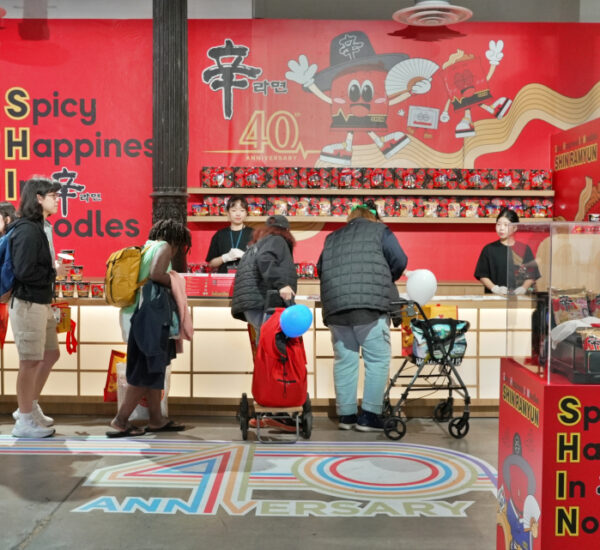
The Korean Ministry of Agriculture, Food and Rural Affairs and Korea Agro-Fisheries & Food Trade Corporation (aT) hosted “K-Food Pop-up a Milano” in Milan, Italy, from September 17 to 26. The 10-day event attracted around 9,000 local visitors, introducing everything from kimchi and ramen to Korean sauces, drinks and health foods.
The pop-up was held alongside Milan Fashion Week SS 2027, with the goal of presenting K-Food not simply as something to eat, but as part of Korea’s culture and everyday lifestyle.
From Traditional Korean Craft to Modern K-Food
The event space combined traditional Korean design with a modern lifestyle concept.
A traditional Korean mother-of-pearl inlaid cabinet, known as najeonjang, was incorporated into the interior, creating a visual connection between Korean heritage and contemporary food culture.
Visitors could explore several themed zones:
- K-MARKET ZONE – Korean snacks, drinks, ramen, kimchi and other products available for purchase
- K-TASTING ZONE – A space to taste and discover Korean foods
- Cooking Class Zone – Cooking experiences using Korean ingredients
- F&B Zone – Korean dishes prepared for visitors
- K-LOUNGE – A space to experience Korean culture and lifestyle
This format gave visitors more than a simple product showcase. They could taste Korean food, learn how to cook with Korean ingredients and experience elements of Korean culture in one place.
Korean Sauces Meet Italian Cuisine
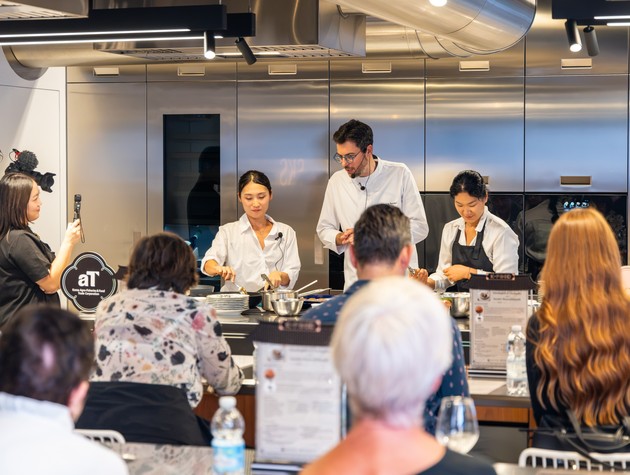
One of the highlights was a series of cooking classes led by well-known chefs working in Italy.
The chefs demonstrated how Korean ingredients such as jang (fermented Korean sauces) and kimchi powder can be incorporated into Italian-style dishes.
Another standout program was “APERITIVO-COREANO,” inspired by Italy’s famous aperitivo culture.
Korean ingredients including yuzu, omija and maesil were used in cocktails, which were paired with Korean dishes.
The combination of familiar Italian dining culture with Korean flavors created a new way for local consumers to experience K-Food.
One Italian visitor, Teresa, said she already enjoyed kimchi and learned through the cooking class that it could also be used in Italian cuisine.
She also said experiencing Korean food and various aspects of Korean culture together in one location was particularly memorable.
K-Food Business Opportunities Expand in Europe
The Milan pop-up was also connected to a Korean food export sales roadshow held from September 22 to 23.
Five Korean food exporters and seven buyers from seven European countries participated in product evaluations and one-on-one export consultations.
The event generated 34 business consultations worth approximately $1.54 million.
Chicken sauces were among the products that attracted particular attention from European buyers.
Korean exporters also attended seminars covering important EU market-entry requirements, including regulations concerning foods containing animal-derived ingredients, the EU Deforestation Regulation (EUDR), the Packaging and Packaging Waste Regulation (PPWR), mandatory labeling requirements, certifications and notifications.
Korean Food Exports to Italy Continue to Grow
Italy is becoming an increasingly important European market for Korean food.
Korean agricultural and fisheries food exports to Italy reached approximately $89.6 million last year, up 24% from the previous year.
In particular, Korean products are gaining more shelf space in major retail stores across northern Italy.
Growth has been especially noticeable in categories such as Korean fermented sauces including soy sauce and gochujang, noodles including ramen, and seaweed products such as seasoned laver.
For European consumers, K-Food is increasingly becoming more than a trend associated with K-pop and Korean dramas. Products that can easily fit into everyday cooking and dining are creating new opportunities for Korean food brands.
KOREA FBI Editor’s Comment
Milan is probably one of the most interesting places to promote K-Food right now.
Fashion, beauty, food and lifestyle are all connected in Milan, so introducing Korean food during Milan Fashion Week feels like a very natural next step for K-Culture.
And I especially like the idea of Korean sauces meeting Italian cooking. Gochujang, kimchi and other Korean ingredients don’t have to be used only in traditional Korean dishes. If local chefs can show Italians easy and delicious ways to use them in their own cuisine, K-Food can become part of everyday European food culture.
From ramen and kimchi to gochujang, Korean snacks and K-cocktails, the K-Food experience in Milan shows how Korean food is continuing to move beyond the “Korean restaurant” concept and into global lifestyle culture.
#KFood #KoreanFood #KFoodInItaly #Milan #MilanFashionWeek #KoreanCuisine #Kimchi #Gochujang #KoreanRamen #KoreanCulture #KCulture #KFoodGlobal #KoreanFoodExport #KoreaFBI
작성자 소개