Last weekend, Tokyo didn’t just host concerts—it became the epicenter of a full-scale K-pop takeover.
From legendary second-generation icons to rising fourth-generation powerhouses, artists like TVXQ, aespa, TWICE, and DAY6 simultaneously filled four of the Tokyo metropolitan area’s largest stadiums—drawing a staggering 410,000 fans in just two days.
And perhaps the most striking moment?
Japanese fans singing along in Korean—loud, unified, and unstoppable.
TVXQ’s 20-Year Legacy Turns Nissan Stadium Into a Red Ocean
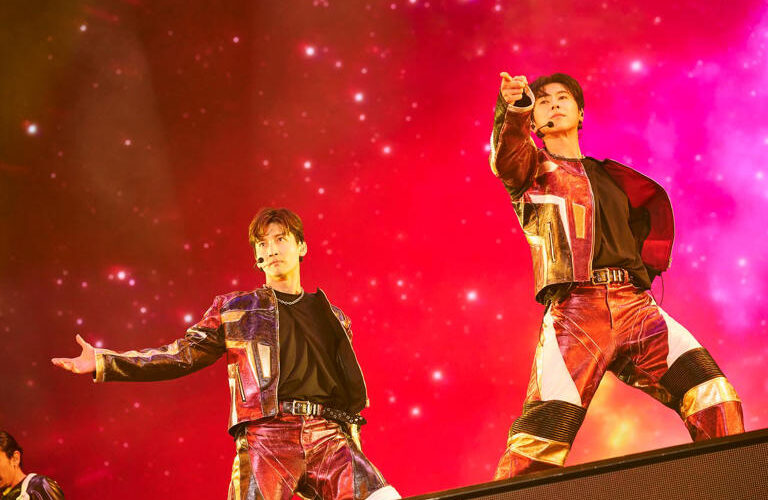
At Nissan Stadium, TVXQ celebrated their 20th anniversary in Japan with a massive “Red Ocean” concert.
For over 3.5 hours, the duo delivered 31 songs while running across a 470-meter stage, surrounded by 70,000 fans waving red lightsticks.
Fans ranged from their 20s to 60s—proof of TVXQ’s unmatched longevity.
One fan shared:
“I’ve been a fan since 2011. I watch them eight times a year. I’ll love them forever.”
Even after two decades, their emotional connection remains strong.
Both members were visibly moved, repeatedly thanking fans in Japanese.
aespa Brings Korean Lyrics to Life at Tokyo Dome
Meanwhile, Tokyo Dome exploded with energy as aespa wrapped up their global tour.
When hits like Next Level and Supernova dropped, the crowd erupted—not just with cheers, but with perfect Korean sing-alongs.
This is where things get interesting:
- aespa has been in Japan for only 3 years
- Yet most of their setlist was Korean songs
- Fans still sang every word
Karina even remarked:
“The cheers feel like Korea. It’s amazing.”
A Rare Moment: Four Mega Venues, One K-Pop Wave
At the same time:
- TVXQ → Nissan Stadium
- aespa → Tokyo Dome
- TWICE → National Stadium
- DAY6 → Keio Arena
All four venues were packed.
This kind of multi-venue domination by K-pop in a single city, same weekend is extremely rare—even globally.
From Localization to Global Language
The contrast between generations tells a bigger story.
- TVXQ: Built their success with deep localization
→ 28 out of 31 songs were Japanese releases - aespa: Thriving without localization
→ Mostly Korean songs, still massive response
This signals a major shift:
K-pop is no longer adapting to markets
The world is adapting to K-pop
The Evolution of Fandom
Another key change? The decline of the “idol fantasy.”
Even after marriage, TVXQ’s Changmin continues to sell out concerts.
Today’s fans are:
- More focused on music and performance
- Less dependent on romantic idol image
K-pop is evolving from idol culture into a long-lasting global music genre
Why This Weekend Matters
This wasn’t just a series of concerts.
It was proof that:
- K-pop transcends language
- Korean lyrics are now globally accessible
- Multi-generational fandom is real
- Longevity in K-pop is possible
And most importantly—
Fans didn’t need translation. They already understood.
KOREA FBI Editor’s Comment
Tokyo’s K-pop explosion isn’t just about scale—it’s about transformation.
When tens of thousands sing in Korean without hesitation, it signals a cultural shift far beyond fandom.K-pop is no longer a “foreign genre” in Japan.
It’s becoming part of the mainstream soundscape.And at this pace, the next question isn’t how big K-pop will get—
but whether any global genre can match its influence.
작성자 소개