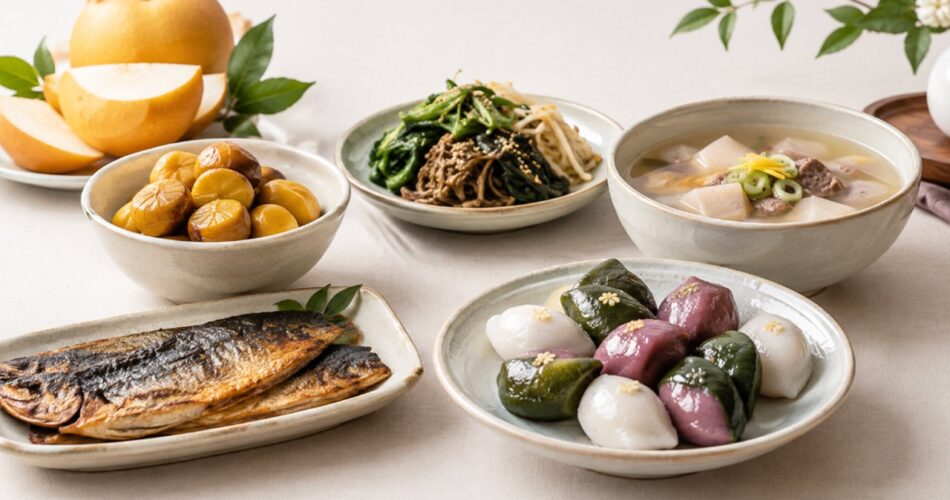
From sesame-filled songpyeon to sweet Korean pears, these five traditional Chuseok foods come with some interesting nutritional benefits.
When Koreans prepare the table for Chuseok, the Korean harvest festival, the meal is usually filled with colorful dishes.
Songpyeon, taro soup, vegetable dishes, chestnuts and pears are just some of the foods commonly enjoyed during the holiday.
What makes the Chuseok table especially interesting is that these foods provide a variety of nutrients, including dietary fiber, vitamins, minerals and unsaturated fats.
Here are five traditional Chuseok foods worth paying attention to this year.
1. Sesame Seeds: More Than Just a Songpyeon Filling
Songpyeon is one of the foods most closely associated with Chuseok.
These traditional Korean rice cakes are made from rice flour and filled with ingredients such as sesame seeds, mung beans, chestnuts and beans.
Sesame seeds contain unsaturated fatty acids, dietary fiber, vitamin E and magnesium, as well as compounds such as lignans and phytosterols.
These nutrients and compounds have been studied for their potential roles in antioxidant activity and cholesterol metabolism.
Interestingly, research has also examined the relationship between sesame consumption and blood pressure.
A 2017 meta-analysis published in the Journal of the Science of Food and Agriculture combined data from eight controlled trials involving 843 participants.
The analysis found that groups consuming sesame had average systolic blood pressure readings about 7.83 mmHg lower and diastolic readings about 5.83 mmHg lower than control groups.
However, the researchers also noted substantial differences between the studies, meaning the findings do not establish a direct cause-and-effect relationship between eating sesame and lower blood pressure.
So, sesame is certainly an interesting ingredient — but it is not a substitute for blood pressure treatment.
2. Taro Soup: A Traditional Chuseok Comfort Food
Taro soup, or toranguk, is another traditional dish often found on Korean holiday tables.
Taro is an underground corm, while taro stems are the stalks of the plant’s leaves.
Taro stems are a source of minerals such as calcium and potassium.
Raw taro stems contain approximately 65 mg of calcium and 430 mg of potassium per 100g.
Potassium is involved in maintaining the body’s sodium balance and is related to the process by which the kidneys excrete sodium through urine.
That makes potassium an interesting nutrient to consider during holidays, when meals can contain more sodium than usual.
Of course, the overall nutritional profile of taro soup also depends on how it is prepared and how much salt or other ingredients are added.
3. Spinach Namul: A Vitamin and Mineral Powerhouse
Korean holiday meals are never quite complete without namul, seasoned vegetable dishes.
Spinach namul is one of the most familiar choices, often appearing alongside other vegetables such as bellflower root and bracken in the traditional three-color namul combination.
Raw spinach contains just 23 calories per 100g, while providing a range of vitamins and minerals.
The same amount contains approximately:
- Vitamin K: 483 μg
- Vitamin A: 469 μg
- Folate: 194 μg
- Vitamin C: 28 mg
- Iron: 2.7 mg
- Potassium: 558 mg
Spinach also contains iron, although it is non-heme iron, the form found in plant foods.
Iron is essential for producing hemoglobin, the protein in red blood cells responsible for carrying oxygen.
Registered dietitian Kayla Kopp has noted that a diet containing iron-rich foods such as spinach may help support adequate iron intake and reduce the risk of iron deficiency.
4. Chestnuts: A Different Kind of “Nut”
Chestnuts are another classic ingredient in Korean holiday dishes and desserts.
Although chestnuts are commonly grouped with nuts, their nutritional profile is somewhat different from that of many other nuts and seeds.
A 28g serving of chestnuts contains about 69 calories and only 0.6g of fat, making them relatively low in fat compared with many other nuts.
Chestnuts also contain minerals including potassium, copper, manganese and selenium.
Copper, manganese and selenium are involved in the body’s antioxidant defense systems and other biological processes.
Chestnuts also stand out because they contain vitamin C, which is relatively unusual among nuts and seeds.
Their combination of carbohydrates, relatively low fat content and various micronutrients makes chestnuts a unique part of the traditional Chuseok table.
5. Korean Pears: A Sweet Source of Fiber
And then there is the fruit that often finishes the meal: the Korean pear.
One medium pear contains approximately 102 calories, 27g of carbohydrates, 6g of dietary fiber and 17g of sugar.
It also provides around 206 mg of potassium, 8 mg of vitamin C and 8 μg of vitamin K.
The standout nutrient is dietary fiber.
With about 6g of fiber in one medium pear, eating a whole pear can provide more than 20% of the daily fiber intake recommended for adults.
Pears also contain pectin, a type of soluble dietary fiber.
Dietary fiber can influence digestion and the rate at which carbohydrates are absorbed, which can help moderate the rise in blood glucose after meals.
That makes a fresh Korean pear a refreshing way to finish a traditional Chuseok meal.
A Chuseok Table Full of Variety
The interesting thing about the traditional Korean holiday table is that no single food needs to provide everything.
Sesame seeds provide healthy fats and other nutrients, taro stems offer minerals such as potassium, spinach brings vitamins and iron, chestnuts provide a distinctive combination of carbohydrates and micronutrients, and pears add fiber and natural sweetness.
Of course, portion size and the overall meal matter, especially because traditional holiday dishes can also contain significant amounts of sodium, sugar or calories depending on how they are prepared.
Still, Chuseok is a great reminder that Korean traditional foods can offer a surprisingly diverse mix of nutrients.
KOREA FBI Editor’s Comment
Chuseok food is not just about eating more — it is about eating a little bit of everything.
Personally, I think that is one of the best things about a Korean holiday table.
You get savory dishes, vegetables, rice cakes, fruit and nuts all in one meal. And some of the ingredients we have been eating for generations, like sesame seeds, spinach and Korean pears, have pretty interesting nutritional profiles.
Of course, this doesn’t mean we should suddenly think of songpyeon as a “health food.”
But if you are enjoying Chuseok this year, maybe pay a little more attention to the ingredients on your table.
A traditional Korean holiday meal can be delicious and diverse at the same time.
Happy Chuseok!
#Chuseok #KoreanFood #KoreanCuisine #KoreanTraditionalFood #Songpyeon #SesameSeeds #TaroSoup #Spinach #Chestnuts #KoreanPear #HealthyKoreanFood #KFood #Korea #KoreanCulture #KOREAFBI
작성자 소개